
 Risk Rocket 365 · The renewal method
Your renewal, run as a process
you can audit.
Risk Rocket 365 is the renewal method inside MetRisk Services — your renewal as a managed process, not a relationship. One written coverage Blueprint, the right brokers in front of the right carriers, every quote scored on evidence before anyone talks price.
Who the method is built for
Companies with $500,000+ in annual insurance spend — enough entities, lines and contractual obligations that a structured process reliably finds something material.
Free, and nobody contacts your broker.
Watch first
The method, in about four minutes.
Everything below this, explained by the people who run it — what a Risk Profile actually is, why the spec gets written before anyone goes to market, and what you end up holding at the end.
MetRisk Services · 4 min
How Risk Rocket 365 works
Why the method exists
You never find out whether your program was designed properly until a claim hits.
Almost everything here runs on trust — that the coverage is right, the limits adequate, the exclusion that matters isn't in there. That trust gets verified exactly once, at the moment it's too late to act on.
3 cards · swipe →
None of these are exotic. They're ordinary exposures with ordinary answers — provided someone asks the question before the claim instead of after. That's the entire job, and the part almost nobody gets paid to do.
The shape of it
Here's what happens when you start.
We're telling you in advance.
What we do at each stage, what we need from you, and the document you end up holding.
The market process
One process. Every carrier. No circus.
Most brokers shop your account. We market it — then every carrier is approached once, by the broker best positioned to win it, and every quote is scored against the same standard.
Most brokers send an underwriter a loss run and a cover note, then hope. We build the case for your account — the risk story that gets it priced on its merits, not defensively.
One Blueprint. Eight carriers — each approached once, by the broker best positioned.
How we get paid
Our fee doesn't move when your premium does.
You pay a flat fee to run the method — the same whether your premium goes up, down, or nowhere at all, and the same whichever option you pick. The only way we win is by getting the program right.
Think of it like a home inspector alongside your realtor — a flat fee for someone whose answer doesn't depend on the deal closing.
1How we count these
All MetRisk Services fee-only clients over the last 10 years, including accounts where we found little, from the outcomes report we prepare for each account every year. Outcomes are claim recoveries, experience-mod reductions, dividends, and premium reductions against the prior year's premium. $3.20 is those outcomes divided by the fees the same clients paid MetRisk.
- Flat annual fee — never a percentage of your premium
- Broker commission disclosed on every quote, in writing
- No contingency payments, overrides, or profit-sharing
The commission isn't wrong — it's undisclosed. We show it to you on every quote.
Flat fee. Work through any broker — yours, ours, or a new one. No one else runs the process this way.
We quote the fee plainly in the first conversation, and that conversation costs you nothing.
Start the free program analysisIn their words
What it looks like when someone actually runs the process.
2 client stories · swipe →1–1 of 2 client stories
“Before partnering with MetRisk, we relied on a consultant and a large, publicly traded broker who focused solely on shopping our account for better rates. When claims frequency began to climb, both parties essentially gave up, blaming the 'hard market' for our rising costs. We were being drained by nuisance and fraudulent claims that decimated our profitability. The MetRisk team stepped in with a radically different, aggressive strategy. By implementing their '48 Protocol' and taking direct control of the claims process, they reduced our incurred losses by a staggering 73%. This aggressive strategy allowed us to restructure our program and achieve a 40% premium reduction—even as our NYC multi-family real estate peers saw 15% increases. MetRisk is the strategic partner you need to turn claims into a competitive advantage.”
“We're heavily involved in WRAP and CCIP programs, so maintaining a clean Experience Modification Rate (EMR) is critical to our bidding capacity. When our EMR unexpectedly spiked despite a clean claims history, MetRisk identified the anomaly immediately through their proactive weekly monitoring. They discovered that a WRAP Administrator on a specific CCIP project had incorrectly reported a significant claim against our ID number, coordinated the correction, and restored our rating before it impacted our business. Their expertise in year-round risk management is a game-changer.”
The deliverable
What the analysis looks like.
An illustrative example of what we find reading an incumbent program. Gaps like these survive for years because policies get rolled over, not re-designed.
- Plain-English explanations of complex risks
- Actionable context based on your industry
- Direct ties to lender and contract requirements
Meridian Construction Partners (Sample)
Illustrative program analysis — run before any broker is contacted
No Environmental/Pollution Liability
If your work involves ground disturbance, demolition, or work in pre-1980 buildings, pollution liability is a standard, material exposure gap. A single contamination claim can exceed your current umbrella limits.
No Cyber Liability
Construction firms increasingly use project management software, BIM, and subcontractor portals. A ransomware incident or data breach is no longer a tech company problem.
D&O limit appears low relative to revenue
At $42M revenue with 3 entity locations and lender relationships, $1M D&O limit may be insufficient. Industry standard for comparable GCs is $3M–$5M.
Compounds
every cycle
The method isn't a one-time transaction. It compounds.
Most renewals restart from zero every year. A run process compounds — each cycle the Blueprint gets sharper, the claims history gets cleaner, and your position with the market gets stronger.
Blueprint & Market
Get the best coverage available today
Bind & Protect
Claims advocacy reduces your losses
Stronger Position
Lower loss ratio, cleaner history
Next Full Market
Negotiate from power, not scratch
When a claim hits, we're on your side of the table, reviewing the carrier's position against your policy language. Every engagement leaves the same paper trail: what we required, what the market offered, what was recommended and why — signed, dated, and yours. If a board or lender ever asks, “What process did we run?” — the answer is already on file.
Bring last year's declarations and loss runs and we'll show you what the first cycle would find.
Walk a full engagement firstWhere your program lives
A portal you open, not a binder you file.
Everything the method produces stays live in your Risk Rocket 365 portal: the Blueprint, every quote's score, the open gaps and what closing each one takes, and your advisor's claims work between renewals.
When someone asks how the program stands, you look — you don't schedule a call to find out.
Risk Rocket 365·Meridian Construction PartnersBlueprint fit
52%
Current program — rolled over 3 years, never re-scored
Open gaps
3 critical
Umbrella capped at $5M · no cyber · no environmental
The market
8 carriers
3 brokers · each carrier approached once · 5 quotes in
Advisor activity this quarter
- Flagged for reserve review: Auto Collision (2025) — reserves elevated vs. severity
- Closed: GL Property Damage — reserve released
- Quarterly loss-control walkthrough recommended — WC slip/fall pattern
Sample data — illustrative account, figures for demonstration only
Who this is for
The CFO who owns the insurance program.
You own the program without wanting to become an insurance expert. You've reviewed the policies, asked the questions, trusted your broker — but you have no independent way to know if the answers were right. That's not a gap in your expertise; it's a gap in the structure of the relationship.
Shopping a program this complex is real work, and most of it isn't yours to do — we order the loss runs, deal with the brokers, run the market. Because we hold the history, each cycle after the first gets easier. The real risk was never picking wrong; it's putting in the effort and ending up with nothing to show for it — the outcome the method exists to rule out.
You stay in control — you approve the Blueprint, you see every score, you make the call. We run the process; nothing binds without you.
Timing
The method needs a runway.
A real market process starts about 120 days out — loss runs ordered, Blueprint written and signed, the market mapped before submissions go anywhere. Put in your expiration date to see where you sit against that clock, and whether this cycle or the next is the realistic one. The date is a planning tool: it tells you when to start the conversation.
Where are you in your renewal cycle?
Enter your policy expiration date for a personalized timeline.
When does your program renew?
Leave the date and we'll follow up with you 120 days before it — early enough to run a real market process, and to tell you whether this cycle or the next is the realistic one.
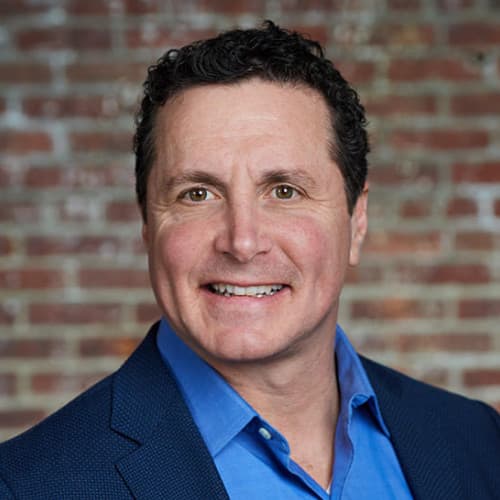
Fifteen minutes with Michael Stoop, our founder. Nothing to prepare — bring the question you can't get a straight answer to.
Or call us now — 347.252.6150
Not ready for a conversation?
Take the blind-spot check
Ten questions about your own program, answered from memory in ninety seconds. Nothing uploads.
Get one policy reviewed, free
Send the policy you are least sure about. We read it against how you operate and send back the three findings with the most at stake, each tied to its page.
Run your own loss pick
Premium and losses in, your ratio against the 50% line out — one year is enough. Nothing is submitted to anyone.
Walk a full engagement
A sample account, start to finish — the blueprint, the gaps, the scored quotes, the decision. Judge the work before the pitch.
- Flat annual fee — never a percentage of your premium
- Broker commission disclosed on every quote, in writing
- No contingency payments, overrides, or profit-sharing