Most construction companies believe their workers’ compensation costs are driven by the severity of their injuries. The claims data says otherwise.
If you are the CFO, HR Director, or Ops Manager tasked with actually managing the insurance renewal, it’s essential for you to understand this.
Time and again, the single biggest predictor of a claim’s cost, litigation status, and duration isn’t the severity of the injury. It is how your organization handles the first 48 hours after the incident occurs.
For privately held construction firms, especially those operating in high-cost insurance markets, failing to control that 48-hour window is a costly mistake. A moderate, entirely survivable injury—a strain, a pinch, a slip on a flat surface—can easily morph into a six-figure liability.
Not because the injury demanded it, but because nobody took ownership of the response. And when claims spiral, so does your next insurance renewal.
If you ask any seasoned underwriter or defense attorney which injuries quietly become the most expensive, they won’t point to the catastrophic ones. They point to the “soft tissue” injuries. The ones that seemed minor enough on a Tuesday that nobody treated the next two days like they mattered.
Here is the reality of commercial risk: severity doesn’t dictate ultimate cost. Response does.
A moderate injury handled with a documented, disciplined protocol in the first 48 hours often resolves in weeks, at a fraction of the expected cost. That same injury, left to unfold reactively without a clear chain of custody for facts, immediate medical direction, or consistent communication, will result in claims reserve increases, higher insurance costs, and litigation that never needed to happen.
The difference isn’t the injury. It’s whether your company had a protocols in place for compressing the claim impact, or whether the incident was left to manage itself.
Reactive doesn’t mean negligent. Most construction companies genuinely care about their people. But “caring” and “controlled” are not the same thing, especially when it comes to protecting your balance sheet. A reactive response typically looks like this:
The financial damage of this unstructured Day of Loss response remains invisible until the claim file is six weeks old, the attorney letter arrives, and your loss runs are permanently impacted. By the time renewal season hits, you are trapped in a “blind-buy” scenario, forced into the quoting circus just to find a premium the CEO will approve.
Workers’ compensation claims are, at their core, a battle over narrative and trust. Whoever controls the facts early controls the financial trajectory of the claim. Consider what is actually happening during that first window:
The injured worker is forming an impression of your competence. If their first experience is confusion or delay, they don’t conclude you are busy; they conclude you don’t care. Study after study shows that attorney involvement correlates far more strongly with a perceived lack of empathy and organization than with injury severity.
The medical trajectory is being set. If a worker ends up at an unfamiliar clinic with no relationship to your business and no context on your return-to-work program, you have just handed control of medical inflation to a stranger. Unnecessary imaging and extended off-work periods start here.
The factual record is decaying in real time. Witness memory degrades rapidly after 24 hours. If you haven’t captured statements, photos, and a clear timeline immediately, you are negotiating a future financial dispute using secondhand recollection instead of documented fact.
Your carrier is building a picture without you. If your company isn’t the first and most organized voice describing what happened, the adjuster’s initial read on the claim and the reserves they set, gets shaped by whatever information arrives first.
By hour 49, there is no “do-over” period. The company that shows up reactively at day three is not managing the claim it could have managed at hour three. It’s managing whatever the claim has already become.
Mid-market companies tend to underestimate this risk because the costs don’t show up as one dramatic invoice. They show up as a slow accumulation of operational drag that ultimately ruins your insurance renewal:
These costs arrive disguised as “just how workers’ comp goes.” In reality, they are the preventable outcomes of a missing Day of Loss protocol.
A documented Day of Loss protocol isn’t a safety binder that sits in a drawer. It’s an executive-level financial control mechanism. When properly architected, it transforms field chaos into predictable data.
Here is what it actually changes about your risk profile:
Companies that operationalize these controls don’t just see lower claim costs. They see shorter claim durations, lower attorney involvement rates, and over time, a materially better Experience Modification Rate (E-Mod).
If a worker were injured on one of your job sites this afternoon, could your foreman, your HR lead, and your executive team describe exactly what happens in the next two hours without checking with each other first?
If the honest answer is “probably not,” your organization is relying on hope. And hope is not a claims strategy.
You cannot achieve controlled, predictable renewals if you are bleeding capital at the site of the injury. The companies that successfully increase their profit margins and secure their balance sheets aren’t necessarily the ones with the fewest injuries. They are the ones who refuse to surrender control of the narrative.
If you want a clear, executive-level picture of how prepared your operations actually are to control a claim—and protect your next renewal—take a few minutes to complete our diagnostic assessment. It is the first step toward delivering Decision-Ready updates to your leadership team, rather than excuses.
It takes just a few minutes, and it is the first step toward taking ownership of your risk program. Because in workers’ comp, filing the claim is never the finish line—it is the just the beginning.
You gathered the documents. You filed the First Report of Injury. The adjuster has the file.
So the claim is handled, right?
In reality, the moment an executive mentally files a workers’ comp claim under “done” is the exact moment that claim begins to actively erode their margins. The true cost isn’t the money you see on this year’s premium invoice; it’s the money tied to next year’s Experience Mod increase, as well as the year after that, and the year after that. By the time it shows up as a surprise increase at renewal, the financial damage is already locked in, and you are left trying to explain a massive spike in Total Cost of Risk (TCOR) to the ownership team.
Here’s the quiet reality of the insurance marketplace: an open claim with no internal pressure behind it doesn’t get resolved. It gets warehoused. And in the construction sector, where a single lost-time back injury can carry six-figure reserves, a warehoused claim is one of the most expensive off-balance-sheet liabilities you never knew you owned.
If you are a CFO, HR Director, or Controller tasked with managing the insurance program, you already wear too many hats. When an employee gets hurt, the instinct is to treat the claim as a purely administrative hurdle: report it, hand it over to the broker or carrier, and get back to running the company.
The problem is that reporting a claim isn’t managing a claim. Treating the process as a mere paperwork exercise is exactly how companies end up losing control of their renewals.
Consider what actually happens to an unmanaged claim:
The adjuster is managing 120+ other files. Your injured carpenter’s claim is not their priority; it’s a folder in a queue. Without a clear internal owner pushing for updates, demanding reserve justifications, and questioning treatment timelines, the file simply sits. Adjusters triage. Claims that sit quietly get reserved conservatively and revisited “next quarter.”
The employee drifts. An injured worker sitting at home with no contact from their employer stops feeling like part of the crew and starts feeling like a claimant. Research on workers’ comp outcomes shows this repeatedly: the longer an employee is away from work with no engagement, the lower the probability they ever come back. Disengaged employees hire attorneys, and represented claims cost dramatically more.
Claims reserves inflate (and reserves are what price your Mod). Here’s the part that catches most financial leaders off guard: your Experience Modification Rate is calculated using what the carrier has reserved on open claims as of the valuation date. An adjuster who hasn’t touched your file in four months isn’t going to lower a reserve. They’re going to set the reserve based on the highest estimated amount the claim will settle for. That inflated, unchecked number is what gets reported to the rating bureau and baked into your Mod.
Fast-forward to renewal season. Your Mod comes back at 1.18 instead of the 0.92 you budgeted for. On a $400,000 workers’ comp premium, that swing alone is over $100,000 over one year. Since your Mod uses three years of experience, that same lingering claim will keep punishing you at the next two renewals.
But the premium hit is only the first casualty. In construction, your Mod is a business development document:
The bitter irony? Most of that financial damage didn’t come from the injury itself. It came from the eighteen months of internal silence that followed it.
The contractors who consistently run Mods below 1.0 aren’t necessarily the ones with fewer injuries. They’ve implemented systems and protocols to compress their claims. They treat every open claim like an active project with a schedule, an owner, and a closeout date. That looks like:
“Light duty if we have it” is not a program. A real system means pre-defined transitional roles and a standing offer letter that goes out fast. Every week an employee spends on modified duty instead of full lost-time is a week of indemnity that never inflates your Mod.
Someone from your company should be checking in with the injured worker weekly. Keep them connected and reinforce that there’s a job waiting. A ten-minute weekly phone call is the cheapest litigation-prevention tool in existence.
Every open claim on your loss runs requires an internal owner and a documented action plan. That means quarterly reviews with the adjuster, aggressively challenging written reserve rationales, and deliberate pushes toward closure before the unit stat valuation date (the day your reserve figures get snapshotted and sent to the rating bureau).
If you’re only looking at your loss runs when the broker sends the renewal package, you’ve already lost. Monthly reviews catch the claim that’s been open 14 months with no activity, or the reserve that jumped $60,000 with no explanation.
The good news is that replacing the “wait and see” approach with proactive claims management is entirely within your control. Contractors who install real internal pressure on open claims routinely cut claim duration, shrink reserves before valuation dates, and regain control over their renewals.
Before your next renewal turns into an ambush, get an honest, data-driven read on how your current claims and cost-control practices stack up.
We built a quick diagnostic specifically for construction companies. It evaluates how well you are actually managing workers’ comp costs, claims oversight, and Mod exposure—giving you the insights you need to deliver decision-ready updates to your team.
It takes just a few minutes, and it is the first step toward taking ownership of your risk program. Because in workers’ comp, filing the claim is never the finish line—it is the just the beginning.
Every year, hundreds of established construction executives routinely engage in a high-stakes gamble with one of their largest operational expenses: commercial insurance.
As the renewal season approaches, the standard protocol is remarkably passive. Many firms simply gather their raw loss runs, submit them to their broker, and operate on passive hope rather than mathematical design, waiting for a favorable quote from the marketplace. They treat insurance procurement like a game of chance.
If your construction company is approaching its insurance renewals without a true understanding of the algorithms carriers use to price your operational risk, you are not managing a business variable; you are gambling with your balance sheet.
To reclaim control, you must understand how the odds are stacked against you, and how to restructure the rules of the game.
Commercial insurance carriers do not establish premium rates based on intuition, historical relationships, or the superficial negotiation skills of your broker. They rely on massive datasets, predictive analytics, and sophisticated underwriting algorithms.
When a carrier evaluates your construction firm, their predictive models ingest hundreds of distinct data points: multi-year payroll fluctuations, historical loss severity, frequency-of-claim metrics, Experience Modification Rates (EMR), vehicle telematics, and precise workers’ compensation class codes. This algorithm processes your raw operational data to generate a risk-probability score, which automatically dictates your baseline premium pricing.
The critical vulnerability for most construction firms is that they lack this information.
When you do not understand the specific parameters of the carrier’s predictive models, you surrender the ability to control your own narrative. You are simply feeding raw information into a black box and accepting whatever punitive pricing structures emerge. By failing to proactively audit, clean, and position your data before it enters the algorithm, you voluntarily surrender your transactional leverage.
If the carrier is the House, the traditional insurance broker occupies the role of the Dealer. They stand between you and the capital markets, managing the flow of information and reassuring you that they are protecting your interests.
However, a cold analysis of the traditional broker compensation structure reveals a fundamental principal-agent conflict of interest.
Traditional insurance brokers operate on a commission-based distribution model, typically earning a fixed percentage (10% to 15%) of your total annual premium. Under this structure, the economics are clear: higher insurance costs directly translate to larger commission checks for the broker.
Consider the structural disincentive this creates:
While individual brokers may be highly professional, they operate within a legacy system that structurally penalizes them for driving down your costs. They are perfectly content to let you keep playing a high-cost game, because their business model thrives on the very premium inflation that erodes your profitability.
For asset-light industries, a suboptimal insurance renewal is an administrative inconvenience. For a capital-intensive construction firm, it is a direct threat to corporate solvency. The consequences of an unmanaged risk profile damage a contractor’s balance sheet far more severely than almost any other sector:
To stop the systematic drain of your hard-earned capital, you must transition from a passive buyer of insurance policies to an active master of your own risk data. You must stop relying on transactional brokers who profit from your rising premiums.
At MetRisk Services, we understand the precise mechanics of the carriers’ underwriting algorithms, and we deploy the advanced operational risk-management strategies required to restructure your risk profile from the inside out.
We audit your loss runs, challenge inflated carrier reserves, eliminate administrative errors, and build a technically superior narrative that forces underwriting algorithms to work for you, not against you.
It is time to replace passive hope with mathematical precision. Stop allowing legacy brokers to cash commission checks off your operational liabilities. Contact the Risk Strategists at MetRisk Services today, and let’s restructure your risk blueprint to secure your margins.
You can calculate the cost of a ton of structural steel down to the penny. You know your labor allocations by the hour, your equipment depreciation schedules, and the exact margins required to win your next competitive bid.
Yet, when it comes to one of the most volatile line items on your balance sheet—commercial insurance—there is a high probability that your organization simply signs the renewal check, archives the policy, and accepts the cost as an unmanageable tax on doing business.
In an industry where margins are notoriously razor-thin and physical risk is structurally embedded into every job site, treating risk management as a passive, transactional expense is a critical operational failure. Your commercial insurance policies are not a utility bill, they are an active risk-financing instrument. When built correctly, a sophisticated risk program directly lowers your Experience Modification Rate (EMR), giving you a decisive pricing advantage to underbid competitors and win lucrative contracts.
To transition your insurance program from an operational drain into a strategic profit driver, you must first address three systemic failures in your current risk management framework.
In the field, you would never pour a foundation without a geological survey or erect a structure without engineered blueprints. Yet, many construction firms routinely manage seven-figure liabilities completely devoid of real-time claim analytics.
When a incident occurs on-site, it is frequently treated as an isolated administrative event. The incident report is completed, the deductible is absorbed, and the project managers return their focus to the schedule.
Without aggregating and forensically analyzing claim data across all job sites, you remain blind to systemic operational trends. Underwriters do not view claims in isolation; they view them through the lens of actuarial probability.
High-frequency, low-severity claims (e.g., constant minor hand injuries or repeated small-tool losses) signal to the marketplace that your organization suffers from a structural breakdown in quality control and safety culture. In general, frequency is the leading indicator of a catastrophic, business-ending severity event.
Without clean data to identify and remediate the root causes of these minor incidents, you cannot deploy targeted safety protocols. You are left operating in an analytical blind spot while your EMR climbs, silently pricing you out of future bids.
Construction executives are highly focused on business development, project execution, and supply chain logistics. Consequently, the responsibility of managing the annual insurance placement is inevitably delegated. The critical question is: To whom?
Often, the insurance portfolio is handed off to an HR Director, a Controller, or an already over-extended CFO. While these executives are exceptionally talented in their respective domains, they are not commercial risk experts.
When complex risk placement is delegated to inexperienced members, the procurement process almost always defaults to a single, dangerous metric: upfront premium price. They collect three competitive quotes and select the cheapest option, operating under the false assumption that commercial insurance policies are a standardized commodity.
In construction, cheap coverage is a liability masquerading as an asset. A low-cost policy frequently contains catastrophic coverage gaps, such as:
Classification Limitation Endorsements: Restricting liability coverage strictly to designated insurance class codes. If your team performs auxiliary work outside those narrow descriptions—such as a masonry crew doing minor roofing—any resulting claim is completely excluded.
Residential Limitation Clauses: Stripping away coverage if your commercial project is later deemed to have a residential component.
Delegating this specialized discipline to non-experts means your firm is likely paying premiums for illusory coverage, leaving your entire balance sheet vulnerable to a single, uninsurable construction defect or bodily injury lawsuit.
Your loss runs are effectively your organization’s “report card” to the insurance marketplace. They detail every claim, payout, and open reserve compiled over a rolling three-to-five-year period. It is the exact document underwriters scrutinize to calculate your risk premium.
Most construction executives only review their loss runs during renewal season. They look at the final column of numbers, note the total incurred losses, and close the file with a sense of resignation. They do not understand the actuarial mechanics behind the page.
Insurance carriers establish “reserves”—estimated future payouts—on open claims based on conservative, worst-case scenarios. If an employee suffers a moderate back strain, the adjuster may reserve the claim at $150,000, anticipating spinal surgery that may never actually occur.
If you are inexperienced with analyzing loss runs, you do not know how to properly audit these reserves, leaving inflated liabilities on your record. Because your EMR and future premiums are calculated based on these reserves rather than actual cash paid out, you are paying compounding premium surcharges on money the carrier has not actually spent.
Furthermore, when your loss runs are presented to the underwriting marketplace without a strategic narrative, underwriters assume the worst. If you had a catastrophic $750,000 loss three years ago, a raw loss run suggests you are a high-risk operation. You must be able to forensically dissect that loss run and demonstrate to the underwriter that the loss was a statistical anomaly—that you terminated the negligent supervisor, rewrote your site safety manual, and have operated accident-free since.
If you do not write the narrative of your loss runs, the insurance marketplace will write it for you—and they will charge you a premium for the privilege.
If you want to stop bleeding margin and start turning risk into a strategic asset, you must consider who is sitting at your executive table.
A traditional insurance broker is a transactional middleman. They gather your application data once a year, shop it to carriers, deliver a policy, and disappear until the next renewal cycle. Construction firms don’t need another broker; they need a Risk Strategist.
At MetRisk Services, we do not view risk as an annual transaction. We view it as an ongoing operational discipline. A dedicated Risk Strategist integrates directly into your business to execute a triple-threat mitigation program:
In construction, profitability relies on controlling variables. It is time to stop letting your risk management program be an unmanaged, volatile variable that drains your hard-earned margins.
By demanding clear claim data, closing the expertise gap, and aggressively managing your loss runs, you can transform your risk mitigation framework into a direct profit center.
Ready to stop buying insurance and start strategically managing your risk? Reach out to the Risk Strategists at MetRisk Services today, and let’s rebuild your risk blueprint from the ground up.
The U.S. construction market remains a vital engine of economic growth, yet it is currently maneuvering through a complex landscape defined by rising costs, shifting regional dynamics, and evolving risk profiles. For developers and contractors, understanding these shifts is no longer optional—it is a prerequisite for securing favorable insurance terms in a market where carriers are increasingly selective.
From the rise of high-tech infrastructure to the repurposing of urban cores, here is a look at the key trends shaping the construction and insurance marketplace today.
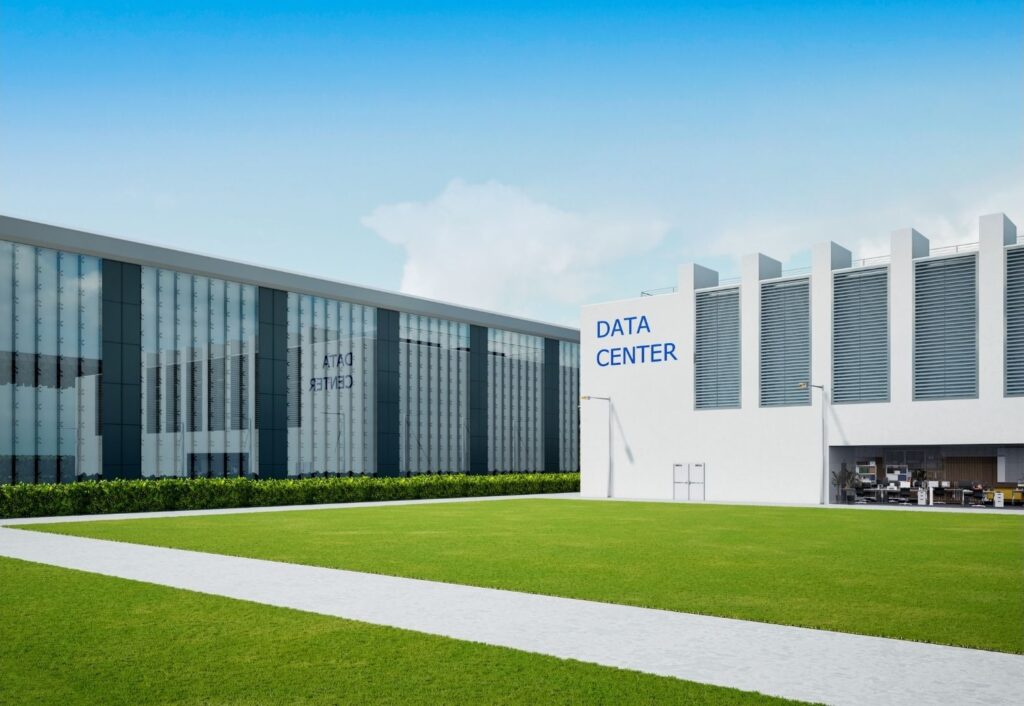
Driven by the voracious needs of AI, cloud computing, and e-commerce, data center construction has become one of the fastest-growing segments in the industry.
Insurance for these “mega-projects” is nuanced. Finding the right carrier to cover the entire scope—from the core shell and power infrastructure to the final fit-out—requires a sophisticated approach to risk placement.
Despite broader economic headwinds, the demand for multifamily housing remains robust, fueled by urbanization and the ongoing affordability crisis in the single-family home market.
For developers, there is a silver lining: multifamily construction insurance rates have stabilized. While fire risks in frame construction and water damage concerns remain high-priority for underwriters, proven builders in favorable regions may see rates remain stable or even decrease heading into 2026. On superior-grade projects, capacity is widely available and highly competitive.
The office sector is currently in a state of transition as hybrid work models reach a new, stable equilibrium.
While carriers generally view ground-up office construction favorably, these projects are increasingly rare. Insurance interest now centers on repurposing projects, where a carrier’s appetite depends heavily on the extent of structural modifications and the intended end-use of the building.
New York remains a category of its own, defined by high project values and a complex legal environment.
As the construction landscape evolves, the “one-size-fits-all” approach to insurance is obsolete. Success in today’s market requires leveraging deep industry data and maintaining strong relationships with both domestic and international carriers to navigate evolving exposures. Whether you are converting a downtown office or breaking ground on a multi-gigawatt data campus, a proactive risk management strategy is the foundation of a successful build.
How is your current project pipeline shifting to meet these new market demands?
Single-Family Starts Down on Economic and Tariff Uncertainty, NAHB, May 16, 2025.